Whoa! The idea of a credit-card-sized device holding your crypto sounds wild at first. My first impression was that it felt gimmicky, but then I used one and things shifted. Initially I thought hardware wallets were all bulky devices with annoying screens, but a smart-card form factor brought a fresh simplicity that made me rethink portability and security together. On one hand convenience screams for compromises, though actually this form factor manages to thread a lot of needles at once, which surprised me.
Really? The NFC bit is the real secret sauce. It lets you tap to sign a transaction without a USB cable or a clumsy dongle, and that changes how people actually interact with crypto in everyday life. My gut said this would be slower, but in practice the latency is fine and the UX is way less intimidating for friends and family who aren’t tech people. Also, there’s an immediacy to tapping that feels almost human—and that’s not trivial when adoption is the goal.
Hmm… security worries popped up fast. I worried about cloning, interception, and physical attacks right away. So I dug in and compared attack surfaces: secure element design, NFC comms, firmware signing, and the supply-chain provenance of the card. Initially I thought only big manufacturers could get those details right, but smaller teams have actually shipped robust implementations with audited chips and signed firmware—still, buyer beware, because not every vendor is equal.
Here’s the thing. Smart-card wallets combine what’s proven—secure elements and air-gapped signing—with a form factor people already trust from banking cards. That social familiarity reduces friction and increases the chance someone will actually use cold storage correctly. I’m biased, but the psychology matters: people are more likely to protect assets when the tool fits their daily habits. Oh, and by the way, that slightly rounded corner on a card matters to comfort more than you’d guess…
Wow! Multi-currency support matters more than enthusiasts admit. Most folks don’t want five wallets for five coins. They want one small object that speaks many protocols without sacrificing security. The underlying secure element and key derivation must support multiple curves and standards, and that’s non-trivial engineering. On the other hand, if the wallet locks itself to a narrow set of coins it’s less useful, and that trade-off is where product teams often stumble.
Seriously? NFC has trade-offs, too. Radio transmissions can be captured, theoretically, but strong session-level crypto prevents replay or tampering even if an adversary listens. My instinct said “air-gap is always better,” but actually a well-designed NFC stack combined with a tamper-resistant secure element gives a very high bar. There are edge cases—theft, coercion, and supply-chain attacks—that remain hard problems and require operational hygiene from users and vendors alike.
Okay, so check this out—tamper resistance is more than a marketing line. The certs (Common Criteria, CC EAL levels, or EMV-like audits) and independent firmware audits are the real signals. I looked at device attestation flows where a card signs a device fingerprint proving it shipped genuine firmware, and that kind of attestation closes a lot of supply-chain risk. Actually, wait—let me rephrase that—attestation helps, but it isn’t a silver bullet: you still need secure activation, trusted retailers, and a sane recovery plan for lost cards.
Whoa! Recovery is the thing most people get wrong. Recovery phrases are brittle and phishable, yet many smart-card workflows still rely on seed phrases. Some newer designs offer social recovery or Shamir backups integrated with the card, which reduces single-point-of-failure risk. I’m not 100% sure social recovery scales well for all users, but combining Shamir backup with a tactile card you keep in a wallet is elegant for those who want fewer moving parts. That said, any recovery method requires education—users must understand trade-offs or they’ll do very risky things.
Really? Look at ecosystem support. A device can be brilliant, but if wallets and services don’t speak to it, it’s just a neat trinket. So interoperability—open APIs, broad protocol support, and a clean UX for mobile apps—makes or breaks real-world utility. On a practical level, NFC makes mobile-first onboarding easier because you can sign setup flows right from your phone; this removes the need for extra adapters that often end up in drawers.
Here’s the thing. I tried a number of card wallets and one in particular—tangem wallet—stood out for combining a card-like user experience with robust auditing and clear multi-asset support. I brought it to meetups and strangers handled it confidently, which tells you something about the ergonomics. The link below is the natural place to learn more about that specific implementation and its ecosystem.
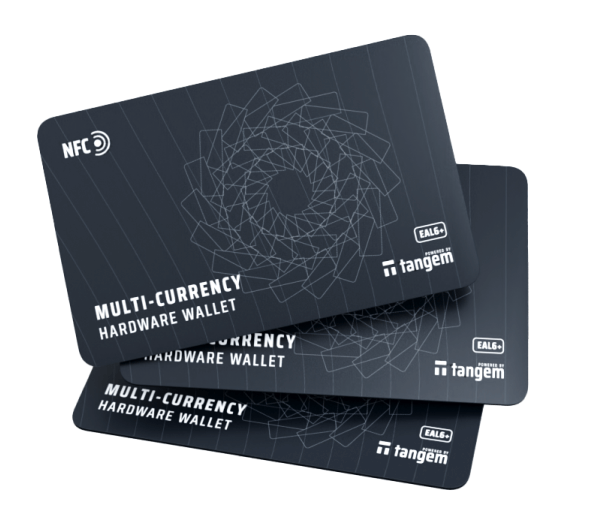
Practical Security Considerations for a Smart-Card Wallet
Wow! Physical security still matters, and a small card is easier to misplace than a heavy device. Keep cards in a secure spot, treat them like you would a passport, and avoid leaving multiple backups in one place. On the technical side, verify device attestation during setup and check firmware signatures when available, because those steps are how you avoid counterfeit hardware. Initially I thought signature checks were overkill for casual users, but in practice they stop more supply-chain compromises than you’d expect.
Seriously? Use a secondary authentication factor for spending limits whenever possible. Combining biometric app unlocking with the card’s tap-confirmation creates layered defense, and while it’s not perfect it raises the difficulty curve for attackers. There’s also a usability balance—too many steps and folks stop using security—so designers need to choose defaults that protect without annoying. My instinct says favor slightly stronger defaults; people adapt quickly and then thank you later.
Hmm… NFC etiquette is underrated. Don’t tap your card near unknown readers, and treat active pairing sessions like sensitive moments. NFC pairing windows should timeout quickly, and the app should clearly show transaction details before you tap to approve. On the one hand these steps sound obvious, though actually most users skip verifying details because they trust devices; so make verification a habit early on.
Here’s what bugs me about recovery marketing: companies promise “ironclad backup” but hide the operational complexity. I’m biased, but I’d prefer a simple, honest manual explaining the exact steps to restore funds, threats to watch for, and a clear user path for lost cards. Practical instructions beat glossy claims every time, and that behavioral clarity reduces catastrophic mistakes.
Really? Think about long-term key archival. Institutional users want HSM-like assurances without the room-sized bill. A fleet of smart cards with distributed recovery schemes can approximate secure key custody at a fraction of the cost if designed properly. However, governance is the real challenge—who holds which pieces, what’s the quorum, and how do you rotate keys when needed—these are organizational problems, not just engineering ones.
Whoa! On standards—open specifications and audited libraries are the things that allow wallets to interoperate and audits to be meaningful. Closed ecosystems lock users in and increase systemic risk, because a single vulnerability in a proprietary stack scales badly. My experience in audits taught me to favor transparency and community-reviewed code when possible, even if that slows feature rollout.
Common questions people actually ask
Can an NFC smart card be cloned?
Short answer: extremely unlikely if the card uses a modern secure element and signed firmware. The attack surface exists, but proper attestation, anti-cloning hardware, and session-level crypto make cloning impractical for most adversaries. I’m not 100% paranoid, but keep cards safe and verify attestations during setup to reduce risk.
Will it support my altcoin of choice?
Many cards support major chains and common curves, and new tokens are often added via app-level support or firmware updates. If you need a niche token, check the supported standards and whether the provider offers firmware or app updates without compromising key security. I’m biased toward open standards because they make adding support far easier.
What if I lose the card?
Recovery methods vary: seed phrases, Shamir backups, social recovery, or custodial fallbacks. Choose a recovery method you can execute under stress and practice the steps once so they’re not foreign later. Also, consider physical backups stored separately—don’t put all the copies in a single safe, because single points of failure are still a thing.
Okay, so as a wrap-up thought—though I’m avoiding neat little summaries—this space is rapidly maturing and smart-card wallets are a compelling intersection of ergonomics and security. I’m excited and cautiously optimistic: the tech solves real friction, yet human behavior and supply-chain realities still determine outcomes. Try one in a low-stakes setting first, check attestations, and be deliberate about recovery planning; do that and you’ll have a very practical blend of portability and protection that feels like the next step for everyday crypto users.